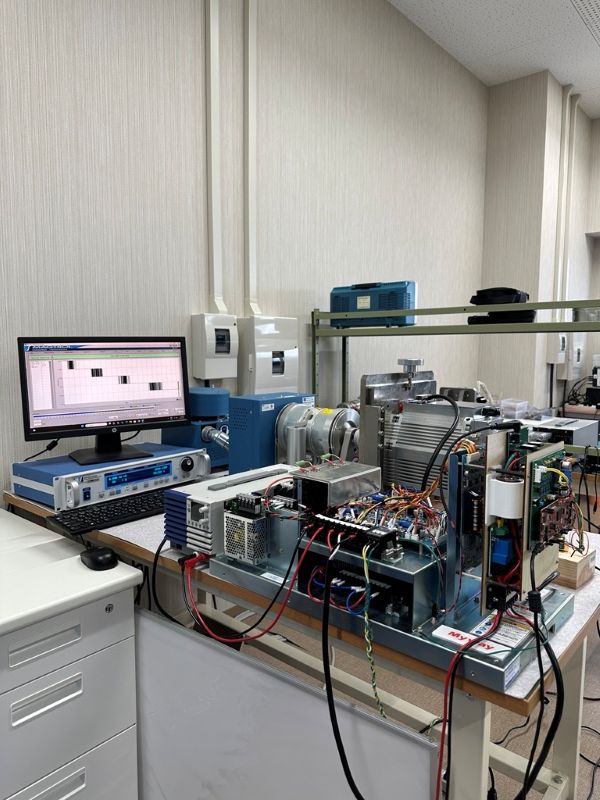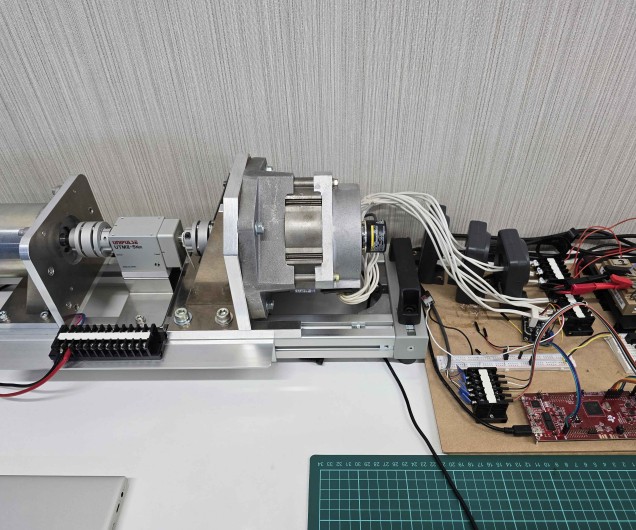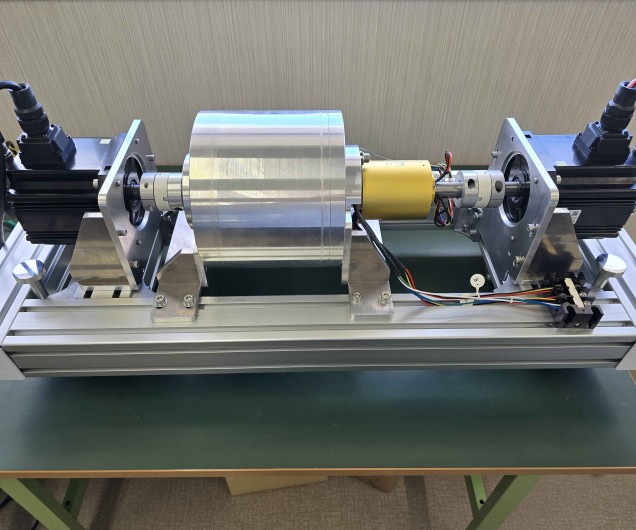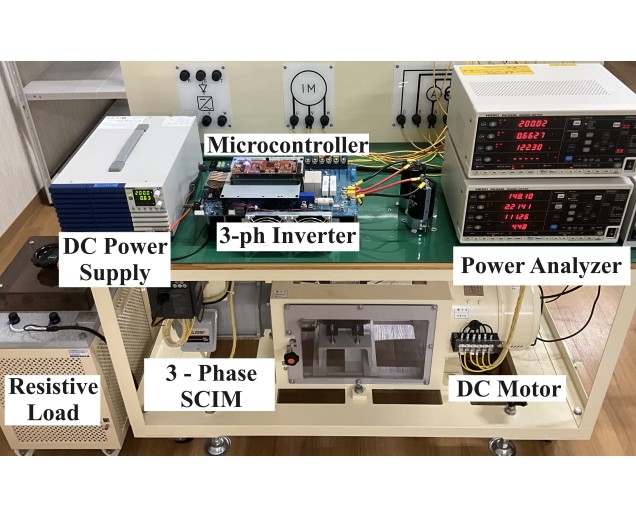


Key experimental facilities and research equipment available at the EMDS Laboratory.
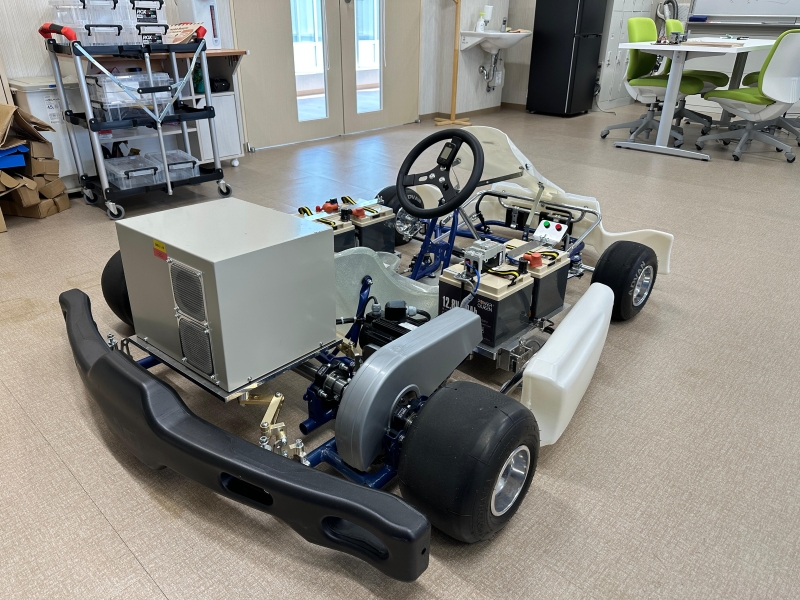
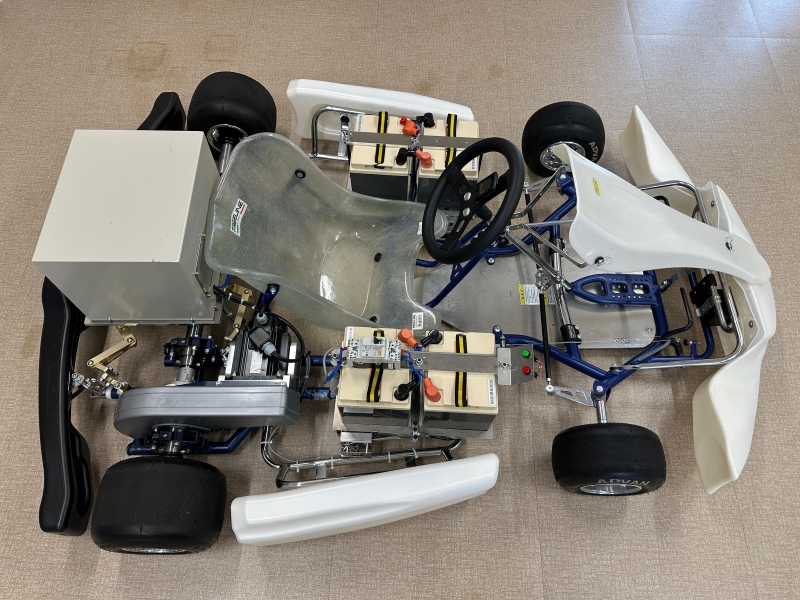
The Mini Electric Vehicle (EV) research platform serves as a versatile experimental testbed for investigating advanced electric drivetrain technologies and control strategies for next-generation electric vehicles. The platform enables comprehensive evaluation of electric motor designs, inverter control methods, and real-time control algorithms under realistic operating conditions, bridging the gap between simulation-based studies and practical vehicle implementation.
To enhance the realism and functionality of the system, several mechanical upgrades have been incorporated.
Notably, a custom-designed differential mechanism has been integrated into the drivetrain to improve vehicle
handling characteristics and achieve more effective torque distribution between the driven wheels. This
modification allows researchers to study the interaction between mechanical drivetrain dynamics and control
strategies, particularly under varying load and traction conditions.
Currently, the platform is being actively utilized for research on sensorless temperature estimation techniques
for electric motors. By combining electrical measurements and low-order thermal models, this work aims to estimate
internal motor temperatures without the use of embedded sensors. The outcomes of this research contribute to improved
thermal reliability, enhanced efficiency, and optimized performance of electric vehicle powertrains, especially under
transient operating conditions such as acceleration and deceleration.
The Mini EV platform provides an essential foundation for both fundamental research and practical validation, supporting
ongoing efforts toward more efficient, reliable, and intelligent electric vehicle systems.

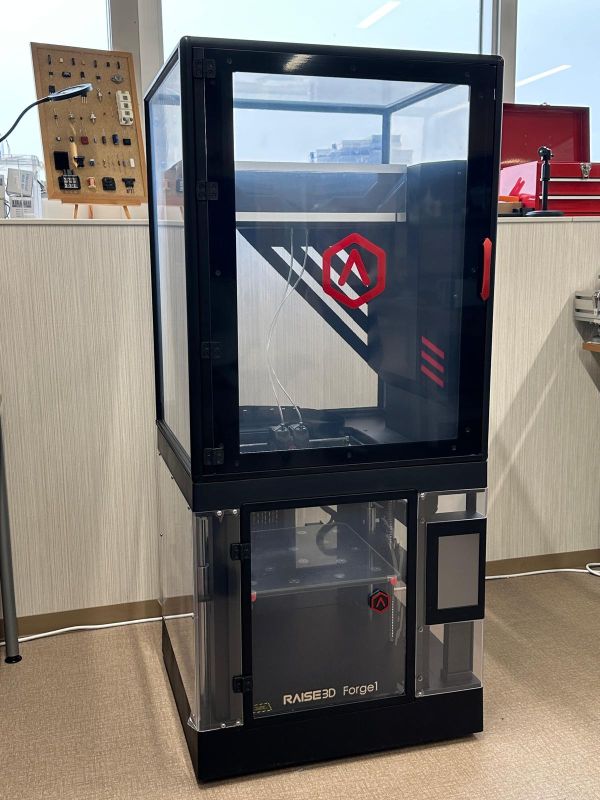
The EMDS Laboratory is equipped with a Raise3D Forge1 metal 3D printing system, which enables rapid prototyping and fabrication of functional metallic components for research and experimental validation. This system allows researchers and students to transition efficiently from digital designs to physical hardware, significantly shortening the development cycle for electric machines, power electronic systems, and mechanical subsystems.
The Forge1 supports the fabrication of complex geometries that are difficult or impractical to achieve using conventional machining methods. This capability is particularly valuable for producing custom motor components, structural brackets, cooling channels, housings, and test fixtures tailored to specific experimental requirements. By enabling design freedom and iterative development, the metal 3D printer enhances both creativity and engineering precision within the laboratory.
In addition to prototyping, the system is actively used for manufacturing parts intended for functional testing and validation. Printed components are incorporated into experimental setups such as motor test rigs, electric vehicle platforms, and power electronics assemblies, allowing performance evaluation under realistic operating conditions. This integration supports research focused on lightweight design, thermal management, and structural optimization.
The Raise3D Forge1 also plays an important role in hands-on education and skill development. Students gain practical experience in design for additive manufacturing, material selection, and post-processing considerations, bridging the gap between theoretical design concepts and real-world implementation. Through its use, the EMDS Laboratory strengthens its capability to conduct end-to-end research, from concept and simulation to fabrication and experimental verification.


The EMDS Laboratory is equipped with a high-precision motor test bench centered around the Magtrol HD-715-5N dynamometer, paired with the DSP7000 digital controller. This system provides a versatile and accurate platform for performance evaluation, characterization, and validation of electric machines under controlled laboratory conditions. It enables detailed investigation of motor behavior across a wide range of operating speeds, torques, and load profiles.
The Magtrol HD-715-5N dynamometer allows precise torque and speed control, making it suitable for testing various types of electric machines, including induction motors, permanent magnet machines, and switched reluctance motors. By applying programmable load conditions, researchers can replicate real-world operating scenarios such as acceleration, deceleration, steady-state operation, and transient load changes. This capability is essential for analyzing efficiency, torque ripple, losses, and dynamic response.
The DSP7000 controller serves as the central interface for system control, data acquisition, and real-time monitoring. It enables synchronized measurement of mechanical and electrical parameters, including speed, torque, power, and efficiency, while offering flexible control modes for different experimental objectives. The controller also facilitates integration with external control hardware and software environments, supporting advanced research in motor control algorithms and system-level optimization.
This motor test bench plays a critical role in research related to thermal management, loss modeling, and sensorless estimation techniques. Experimental data obtained from the dynamometer system are used to validate analytical models, finite element simulations, and real-time control strategies. Additionally, the setup provides valuable hands-on experience for students, allowing them to gain practical insights into motor testing standards, instrumentation, and experimental methodology, thereby strengthening the laboratory’s capability for both research and education.